
If your drains are slow, your yard smells like a porta-potty in July, or your toilets keep backing up, your sewer line is not doing okay. And here’s the part most people don’t want to hear: it’s not going to fix itself. In fact, waiting usually makes things worse and more expensive. If you’re dealing with these issues, getting expert sewer repair in Chatsworth sooner rather than later can save you a lot of trouble. This guide breaks down what’s really happening, how repairs work, what it costs, and how to find a plumber you can actually trust.
What Is a Sewer Line and Why Does It Matter?
Your sewer line is the main pipe that carries all the wastewater from your home or business out to the city's sewer system. Every time you flush a toilet, run the dishwasher, take a shower, or wash your hands - all of that water and waste travels through this one pipe.
Think of it as the main drain for your entire property. Every other drain you have - in the kitchen, the bathrooms, the laundry room - eventually connects to this single pipe. It runs underground, usually starting at your foundation and going all the way out to the street.
Because it's buried, most people completely forget it exists. That's honestly understandable. You can't see it, you can't hear it when it's working right, and you've got other things to worry about. But that "out of sight, out of mind" attitude is exactly what turns a $400 repair into a $10,000 nightmare - because by the time you notice something's wrong, it's usually been wrong for a while.
A sewer line that's working the way it should just does its job quietly. A damaged or blocked one pushes sewage back into your home, eats away at your foundation, contaminates your yard, and creates real health risks for your family. That's not a small inconvenience. That's an emergency - and it tends to happen at the worst possible time, like a holiday weekend or right before a big family gathering.
Common Signs Your Sewer Line Needs Repair
Most sewer lines don't just fail out of nowhere. They warn you first. The problem is, those warning signs are easy to brush off - until they're not.
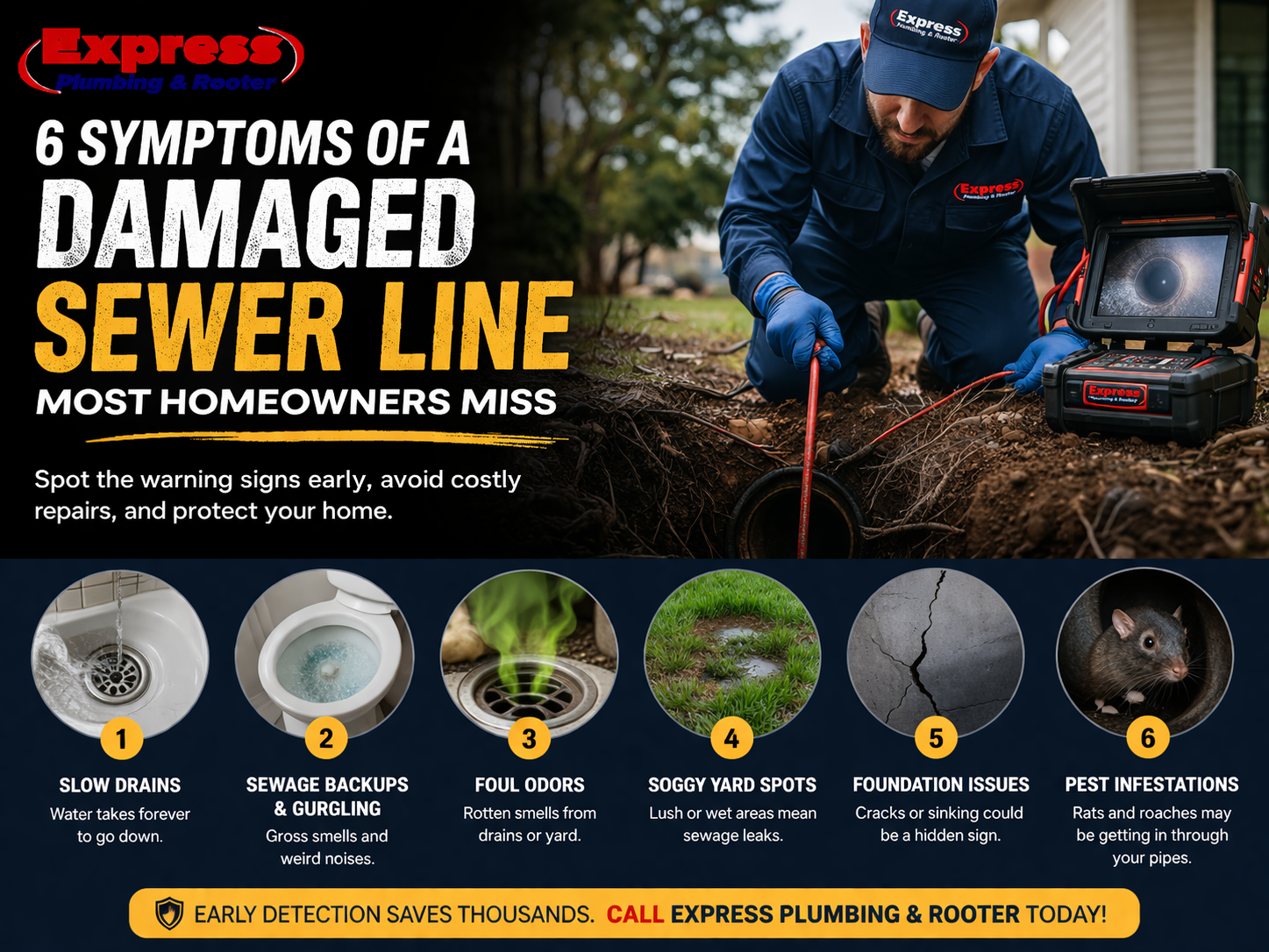
Slow drains all over the house - One slow drain in one bathroom is probably just a hair clog or a soap buildup in that specific pipe. But when multiple drains in different parts of your house are all running slow at the same time, that's your main sewer line struggling. That pattern is one of the most reliable signs there is - don't ignore it.
Sewage smell inside or outside - A working sewer system is completely sealed, so you should never smell anything coming from it. If you're catching whiffs of rotten eggs or raw sewage in your yard or inside your home, that smell is leaking out of a crack or break somewhere underground. That's not a "maybe call someone later" situation.
Toilets that gurgle when you use a different drain - This one confuses a lot of homeowners. If you run your washing machine and your toilet starts bubbling, or you flush a toilet and water gurgles up in the tub, that's air being pushed backwards through your plumbing because something is blocking the normal path out. It's a weird sign, but it's a pretty reliable one.
Wet or sunken spots in the yard - A cracked sewer line underground leaks sewage into the soil around it. Over time, that softens and saturates the ground, causing it to sink or stay wet even when it hasn't rained. If you've got a patch of your yard that's randomly green and spongy, I'd bet money there's a pipe issue underneath it.
Frequent backups - One backup could be a one-time thing - maybe someone flushed something they shouldn't have. Two or three backups within a few months? That's a pattern, and patterns mean there's an underlying problem that isn't going away by itself.
Foundation cracks or settling - This is the serious one. When a sewer line leaks long enough, it erodes the soil underneath your foundation. The foundation starts to shift and crack. At that point, you're not just dealing with a plumbing problem anymore - you're dealing with a structural one, which is a whole other level of expensive.
What Causes Sewer Lines to Break or Clog?
Knowing why sewer lines fail is actually useful - not just for understanding your plumber's diagnosis, but for making smarter decisions about your property going forward.
Tree root intrusion is the biggest culprit, and it's more common than most people realize. Roots don't care where your pipes are - they grow toward moisture and nutrients, and your sewer line is packed with both. They find the tiniest crack or a loose joint in the pipe and work their way in, slowly growing until they've completely blocked the flow or cracked the pipe open from the inside. This happens all the time in older neighborhoods with big, established trees. If you've got mature oaks or eucalyptus near your house, your sewer line is worth keeping an eye on.
Age and pipe material is a big factor that a lot of homeowners don't think about until it's too late. Homes built before the 1980s often have sewer lines made of clay or cast iron. Clay cracks and breaks down over time. Cast iron corrodes on the inside, slowly narrowing until water can barely get through. And then there's Orangeburg pipe - a genuinely terrible material made from compressed wood pulp and tar that was used from the 1940s through the 1970s. It absorbs moisture over the years and eventually just collapses in on itself. If your home is 40 or more years old and you've never had your sewer line looked at, the pipe material alone is reason enough to schedule an inspection.
Grease and debris buildup is something people cause themselves, usually without realizing it. Grease, cooking oil, and fat don't dissolve in water - they cool down and stick to the inside walls of your pipes, building up layer by layer until the pipe is blocked. Restaurants deal with this constantly. But it happens in homes too, especially in kitchens where people pour bacon grease or cooking oil down the drain.
Ground shifting from earthquakes, nearby construction, or just natural soil movement over time can knock pipes out of alignment. When a section of pipe drops or shifts, it creates what plumbers call a "belly" - a low spot where waste collects and sits instead of flowing out. That sitting waste becomes a blockage, and a blockage becomes a backup.
Corrosion from chemical drain cleaners or naturally acidic soil eats through pipe walls over time. People tend to underestimate how damaging chemical drain cleaners actually are to older pipes - they clear the clog, sure, but they also slowly degrade the pipe itself with repeated use.
Types of Sewer Repair Methods
Not every sewer problem needs the same fix - and a plumber who recommends the same solution for every situation is one you should probably get a second opinion on. A good plumber inspects first and recommends based on what's actually there. Here's what each method actually involves, in plain terms.
Drain Snaking
Snaking is the most basic approach, and it's usually the first thing a plumber tries. A long, flexible metal cable with a cutting head gets pushed into the pipe to break up whatever's blocking it - hair, toilet paper, minor root growth, a grease buildup. It's quick, it's not expensive, and it often gets water moving again fast.
The honest limitation of snaking is that it doesn't fix anything structural. It pokes a hole through a blockage - it doesn't remove the blockage, and it definitely doesn't fix a cracked or broken pipe. If you get snaked and the drain slows down again within a few weeks, that's a sign the real problem is bigger than a surface clog. Snaking is useful, but treating it as a permanent fix when you've got root intrusion or pipe damage is a mistake that usually ends up costing more in the long run.
Hydro Jetting
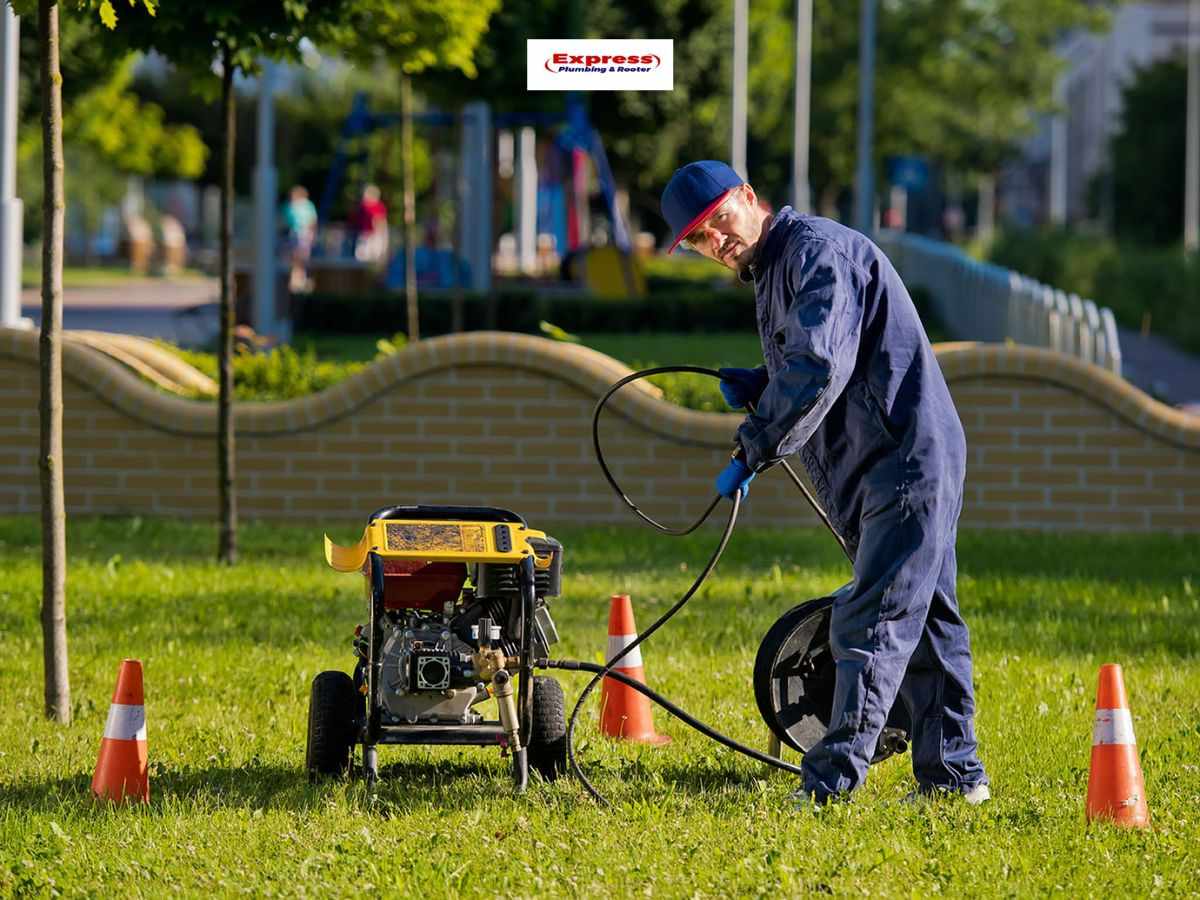
Hydro jetting pushes highly pressurized water through your sewer line - usually somewhere between 3,000 and 4,000 PSI. That's powerful enough to blast through grease buildup, cut through root growth, and scrub the inside walls of your pipes clean. It's not just clearing a path like snaking does - it's actually cleaning the pipe.
This method works really well as a maintenance tool, especially for restaurants or homes with older pipes that have years of buildup. It's also typically done right before a pipe lining job to make sure the surface is clean enough for the liner to bond properly. The one thing to know is that hydro jetting shouldn't be used on pipes that are already seriously cracked or weakened - the pressure can make the damage worse. A camera inspection first tells the plumber whether the pipe can handle it.
Pipe Lining (Cured-in-Place Pipe or CIPP)
This is genuinely one of the best things to happen to sewer repair in the last few decades, and it's the method I'd point most homeowners toward when the pipe has cracks or moderate root damage but hasn't fully collapsed.
The way it works: the plumber inserts a flexible liner coated in epoxy resin into your existing pipe, inflates it so it conforms to the pipe's shape, and lets it harden in place. When it cures, you've got a smooth, sealed new pipe inside your old one - no excavation, no tearing up your yard, no replanting your landscaping afterward.
The liner typically lasts 50 years or more, and the smooth interior actually improves flow compared to older, rougher pipe materials. Most reputable installers back it with a manufacturer's warranty of at least 10 years. It's not the cheapest option upfront, but when you factor in what traditional excavation costs - not just the plumbing but the yard restoration, the concrete work, the time - pipe lining usually comes out ahead. It does require that the pipe still has some structural integrity remaining, so if the pipe has completely caved in, this method won't work.
Pipe Bursting
Pipe bursting is the trenchless answer for pipes that are too far gone to line. A bursting head gets pulled through the old pipe, breaking it apart as it goes, while a new pipe gets pulled in right behind it. You end up with a brand-new pipe without digging a full trench - just small access pits at each end of the run.
This method works well when the pipe needs full replacement but you want to preserve your yard as much as possible. It's a solid option for pipes that have completely deteriorated but are still in a position where the bursting head can pass through.
Traditional Excavation
Excavation gets a bad reputation because it's invasive - digging a trench along your sewer line, removing the old pipe, installing a new one, then putting everything back. It's disruptive, it takes longer, and it's harder on your property. But it's not the wrong answer in every situation.
When a pipe has failed in multiple places, needs to be rerouted, or is buried too deep for trenchless methods to work effectively, excavation is still the most reliable approach. It gives the plumber full visibility into the problem and a completely fresh installation. For serious structural failures, it's sometimes simply the best option - not because it's easier, but because it's the most thorough.
How Much Does Sewer Repair Cost?
This is always the first question, and the honest answer is that there's no single number that applies to every situation. What you pay depends on what's wrong, how bad it is, how long it's been going on, and what method makes the most sense to fix it.
A basic drain snaking runs $150 to $300 in most areas. Hydro jetting is typically $300 to $600. Pipe lining for a standard residential sewer line commonly falls somewhere between $3,000 and $8,000, depending on how long the line is and what condition it's in. Pipe bursting runs in a similar range. Full excavation and pipe replacement can range from $5,000 to $25,000 or more for longer lines, complex access situations, or jobs that require significant concrete cutting or landscaping restoration.
The single biggest factor in your final cost isn't the length of your pipe or even the method - it's how long you've waited. A small root intrusion caught early might need a hydro jetting session and a short spot liner. That same problem left alone for a year or two can cause a partial pipe collapse that turns into a full lining or excavation job. The math almost always works in favor of acting early.
Most reputable sewer companies offer a free or low-cost camera inspection. That inspection is almost always worth getting at the first sign of trouble - you'll know exactly what you're dealing with and you can compare quotes with actual information, not guesses.
One thing worth knowing about homeowners insurance: some policies cover sudden, accidental sewer damage - like a tree falling and crushing your line - but most don't cover gradual deterioration, which is what causes the majority of sewer failures. Some insurers offer sewer line coverage as an optional add-on. It's worth a quick call to your agent before assuming you're paying for everything yourself.
Sewer Repair for Businesses - What's Different?
For a homeowner, a sewer backup is miserable and stressful. For a business owner, it's all of that plus the very real possibility of having to close your doors while it gets fixed - which means losing money every hour the problem isn't resolved.
Commercial sewer lines are larger than residential ones, which means they can handle more volume. But they also require more powerful equipment to clean and repair, and the jobs tend to be more complex. Restaurants face a specific and very common problem: grease traps. When grease traps aren't cleaned and maintained on a regular schedule, the grease backs up into the main sewer line and creates blockages that are tough to clear even with hydro jetting. For any food-service business, grease trap maintenance isn't optional - it's something that needs to be on a regular schedule.
Commercial properties also face stricter regulatory requirements around sewer maintenance in most cities. In many jurisdictions, there are specific rules about how often grease traps need to be cleaned and documented, and failing to comply can result in fines from the city or the health department - sometimes before you even have an actual plumbing problem.
The smartest thing a business owner can do is work with a licensed plumber to set up a preventive maintenance schedule - camera inspections and cleanings regularly, before problems develop. It costs less, it's less disruptive, and it keeps you from facing an emergency that shuts down your operation during business hours. Reactive maintenance for businesses is almost always more expensive than proactive maintenance, both in direct repair costs and in lost revenue.
Why Sewer Repair in Chatsworth Requires Local Expertise
Chatsworth sits in the northwest corner of the San Fernando Valley in Los Angeles - and like most of the Valley, a lot of its older neighborhoods have sewer infrastructure that's been in the ground for decades. Some of those pipes are reaching the end of their usable life, and some passed that point a while ago.
Tree coverage is also significant in many Chatsworth residential areas, which makes root intrusion a particularly common problem here. The combination of mature trees, aging pipe materials, and Southern California's soil conditions - dry most of the year with occasional heavy rain that shifts the ground - creates a pretty consistent pattern of sewer problems in homes that haven't been inspected in a while.
Because Chatsworth falls under Los Angeles County jurisdiction, sewer repair work has to comply with specific local building codes and permit requirements. Not every plumbing company is familiar with how that permit process works in this area, and unfamiliarity with local requirements can cause delays, failed inspections, or complications that a locally experienced contractor would just handle as part of the job.
Sewer repair in Chatsworth also means working in established neighborhoods - properties with landscaped yards, long driveways, mature trees, and sometimes limited access to the sewer line. A contractor who knows the area has seen these access challenges before. They know which pipe materials were typically used in different construction eras in the Valley, they have working relationships with local inspectors, and they understand what the soil conditions mean for how a repair needs to be approached. That local knowledge matters more than most people expect when the job actually gets underway.
How to Choose the Right Sewer Repair Company
This is one area where taking a little extra time upfront genuinely pays off. Sewer repair isn't like replacing a faucet - it's a significant job that affects your home's foundation, your yard, and your family's health. Choosing the wrong company because they gave you a low quote over the phone can cost you far more to fix later.
License and Insurance - In California, sewer repair work requires a valid state contractor's license. You can look up any license number on the California Contractors State License Board (CSLB) website in about 30 seconds - it's free and takes no effort. If a company can't give you their license number or gets cagey when you ask, that tells you what you need to know. Insurance matters too - if something goes wrong during the job and the contractor isn't insured, you could end up liable for it.
Camera inspection before quoting - A company that quotes you a price over the phone without ever looking at your pipe is guessing. Any reputable sewer repair company will run a camera through your line before putting a number on the job. If they skip that step, they're either not thorough or they're not planning to actually scope the damage before starting - neither of which is a good sign.
Written estimate - Get the full scope of work, the method, the materials, the timeline, and the total cost in writing before anyone starts digging or threading anything into your pipe. Verbal agreements are how disputes happen. A company that pushes back on providing a written estimate is not a company you want working on your sewer line.
Warranty - Good work comes with a guarantee. Pipe lining specifically should include both a manufacturer's warranty - typically 10 years or more on the liner material itself - and a workmanship warranty from the installer. If a company won't warranty their work, that's a real red flag.
Reviews and references - Google reviews, Yelp, and the Better Business Bureau all give you useful information, but what you're looking for is a consistent pattern over time - not five glowing reviews posted in the same week. A company with 200 reviews averaging 4.6 stars over four years tells you a lot more than one with 12 perfect reviews from last month.
24/7 availability - Sewer emergencies are not known for happening at convenient times. A sewage backup at 9 PM on a Friday is a genuine emergency, and a company that doesn't offer after-hours service leaves you stuck waiting until Monday. Companies that offer real emergency availability - not just an answering machine that says "we'll call you back" - are worth paying a little more for.
Real-Life Example - What Ignoring a Slow Drain Can Lead To
A family in a 1960s-built home in the San Fernando Valley noticed their bathroom drains were running slower than usual in early spring. They grabbed some store-bought drain cleaner, poured it down, and things seemed fine again for a week or two. So they forgot about it - which is what most people do.
By summer, the toilets started gurgling every time the washing machine finished a cycle. Annoying, but they figured it wasn't urgent. By fall, they had their first actual sewage backup in the downstairs bathroom. That's when they finally called a plumber. A camera inspection showed that a large oak tree in the backyard had sent roots more than six feet into the sewer line, causing a partial collapse in two separate sections.
What could have been a $600 hydro jetting job in the spring turned into a $9,500 pipe lining repair in the fall. Not because the family did anything wrong, exactly - but because those few extra months of root growth had pushed the pipe from "cleanable" to "structurally damaged." Cleaning alone couldn't fix it at that point.
The takeaway isn't that drain cleaners are useless or that every slow drain is a catastrophe. It's that slow drains are information - and ignoring information about your sewer line is almost always more expensive than acting on it.
What Happens During a Professional Sewer Inspection?
If you've never had one done, a sewer inspection is a lot less involved than it sounds.
A licensed plumber feeds a flexible camera on a long cable into your sewer line through a cleanout access point - usually a capped pipe near your home's foundation or somewhere in your yard. The camera sends live video to a screen, and the plumber watches the footage in real time as the camera moves through the pipe.
The inspection shows everything: cracks, root intrusions, corrosion, sections that have sagged or shifted out of alignment, active blockages. The camera also has a signal transmitter built in, so the plumber can pinpoint exactly where underground a problem is located - which means they can plan the most targeted repair without any unnecessary digging.
The whole thing usually takes 30 to 60 minutes. A good plumber will walk you through the footage and tell you in plain language what they're seeing and what your options are. You should leave the inspection knowing exactly what the problem is, where it is, how serious it is, and what it would take to fix it. If the plumber is vague or can't explain what they found in terms you understand, ask more questions - or get a second opinion.
Frequently Asked Questions
How long does a sewer line repair take?
It depends on which method gets used. Hydro jetting can be done in a few hours. Pipe lining typically takes one to two days, including prep and cure time. Full excavation and replacement runs two to five days or more, depending on how long the line is and what site conditions look like. Your plumber should give you a realistic timeline before work starts - not an overly optimistic one just to get the job.
Can I stay in my home during sewer repair?
In most cases, yes. Trenchless repairs cause minimal disruption inside the house, and you can usually go about your day while the work happens outside. For excavation jobs, you'll probably need to avoid using water for several hours at a stretch while sections of the line are open, but staying in the house is generally fine.
Who is responsible for the sewer line - me or the city?
You own - and are responsible for - the sewer line from your home all the way to the property line. The city owns the line from the property line to the main sewer in the street. If the problem is in the city's section, the city handles it. If it's on your property, that's your bill. This boundary trips up a lot of homeowners who assume the city is responsible for more than it actually is.
Does homeowner's insurance cover sewer line repairs?
Most standard homeowners policies don't cover gradual deterioration - and gradual deterioration is what causes most sewer failures. Some policies cover sudden, accidental damage, and some insurers offer sewer line coverage as an optional add-on. The only way to know for sure is to pull out your policy or call your agent. Don't assume you're covered - and don't assume you're not, either.
How often should I have my sewer line inspected?
For most homes in decent shape, every 5 to 7 years is reasonable. If your home is older than 40 years, if you have large trees close to your sewer line, or if you've had recurring drain problems, bump that up to every 2 to 3 years. The inspection itself is relatively inexpensive compared to what it can catch before it becomes a major repair.
Are liquid drain cleaners bad for my pipes?
Short answer: yes, if you use them regularly. They can clear a minor clog temporarily, but the chemicals are caustic and degrade older pipe materials with repeated use. They also do nothing for root intrusion, pipe cracks, or structural problems. If you find yourself reaching for the drain cleaner more than once in a few months for the same drain, that's a sign something bigger is going on and you should call a plumber rather than keep chemically treating a symptom.
What is the difference between a sewer line and a drain line?
Drain lines are the individual pipes connected to each fixture in your home - your kitchen sink, your shower, your toilet. Each one carries waste from that specific fixture. The sewer line is the main pipe that all of those drain lines eventually empty into. A clog in a drain line affects one fixture. A problem in the main sewer line affects everything in the building at once - which is why "multiple drains slow at the same time" is such a telling sign.
Conclusion
Nobody wants to think about their sewer line - and that's completely understandable. It's underground, it's unpleasant, and as long as it's working, it's invisible. But ignoring the warning signs until something fails completely is almost always the more expensive choice. A cracked or clogged sewer line doesn't repair itself. It gets worse, slowly and quietly, until one day it isn't quiet anymore.
Whether you own a home in Chatsworth or run a business in the Valley, the cost of acting early is almost always less than the cost of waiting.
If you're seeing multiple slow drains, gurgling toilets, sewage smells, or wet spots in your yard - Express Plumbing and Rooter is the team to call. They run camera inspections, offer trenchless repair options, respond to emergencies around the clock, and give you a written estimate before any work begins. No phone quotes, no guessing. Just an honest look at what's going on and a straightforward plan to fix it. Reach out to Express Plumbing and Rooter today - and handle this before it handles you.




Write a comment ...